Effective factors in the treatment of infertility


Infertility is one of the issues that has affected the family and marital life of many people throughout history. Due to the problem of infertility, many people, in addition to their life together, have been affected by many damages and they themselves have been involved with many mental problems. In the past, due to the lack of progress in science and sufficient tools to know the causes of infertility, infertility treatment was not possible in many cases.
In the past, women were generally considered to be unable to conceive. In the current era, medical science has proven that when infertility occurs, 40% of the time it may be the woman’s problem, 40% of the time it may be the man’s problem, 10% of the time it is possible for both the woman and men have physiological problems for infertility, and in 10% percent of cases, the cause is unknown. This means that the body of a man and a woman have the necessary conditions to get pregnant, but the couple does not have the ability to get pregnant.
Anyway, if you are among the people who are planning to get pregnant or are dealing with the problem of infertility, it is better to identify the factors that cause the problem of infertility, and on the other hand, know the issues related to the causes of infertility in more detail.
Because many of the reasons related to infertility are not necessarily related to genetics, and if men and women observe some issues correctly, they will not face the problem of not being able to conceive.
When the production and ability of sperm in men face problems and disorders, men have the inability to fertilize women. When the seminiferous tubules in the epididymal ducts of men, which are responsible for the maintenance and development of sperms, are blocked, the sperms are defective, and as a result, it causes male infertility.
Decrease in sperm quality or disruption in its production, which usually occurs due to disruption in male hormonal secretions, is one of the most common causes of male impotence.
Usually, when the veins of the scrotum become varicose (this event is called varicocele in medical terms), the quality of sperm decreases.
Usually, people who are busy with jobs such as baking, casting, driving, etc., because their testicles are constantly exposed to heat, face this problem.
Men who often go to hot saunas and hot tubs also face this problem.
Of course, men who work in jobs that are exposed to chemicals such as anesthetic gases, paints, insecticides, lead materials, etc., also face problems such as weak and slow sperm, which will lead to infertility. Mobile phone waves and continuous use of microwaves also have a destructive effect on men’s DNA.
Stress, mental pressure and insecurity, in addition to causing infertility, will also cause premature birth and abortion.
Stress is basically one of the interfering factors in the function of hormones that stimulate sperm production.
The effect of obesity and overweight on infertility will show itself through increased blood pressure, accumulation of fat around the ovary, etc. Of course, the consumption of harmful food also has a greater impact on the function of sex hormones than you might imagine.
Lack of vitamin E in the body will destroy the tissues related to reproduction in the body of women and men.
Smoking, hookah and other tobacco and drugs have a significant effect on women’s fertility.
When both men and women age, fertility declines.
Many genetic diseases, including diabetes and cancer, can affect a person’s fertility.
The problem of severe and chronic lack of sleep
Just as mental disorders and severe stress can affect people’s pregnancy, lack of sleep can also affect people’s ability to conceive because it increases tension and stress.
Dysfunction of the body’s hormones, including adrenal and thyroid hormones, can cause infertility
Unhealthy diet such as excessive consumption of fast food, solid oils and fried foods can be one of the causes of infertility in men and women.
Also, air pollution is one of the causes of infertility in both sexes, especially men. Because men’s sex cells are more vulnerable to environmental damage than women’s, that’s why in large and industrial cities where air pollution is very high, the number of male infertility is also high in these cities.
Machine life, reduced mobility, abnormal weight gain, unhealthy and inappropriate nutrition are among the factors that increase the rate of infertility in women.
Women whose body mass index is between 25 and 39 are twice as likely to suffer from infertility than other women.
Of course, women who are extremely thin and their body mass index is less than nineteen may also face the problem of not being able to conceive.
Because anorexia nervosa, diets that do not provide enough calories for the body, absolute vegetarianism and other actions of this kind cause the amount of zinc, vitamin B12, blood iron and sulfuric acid in women’s body to be decrease a lot. The lack of these vitamins in the body greatly reduces the fertility of people.
Lack of zinc in the body causes the growth and development of the uterine wall to fail.
Drinking too much coffee and caffeinated substances also has a significant effect on women suffering from infertility problems. It is better for women not to consume more than 500 mg of coffee during the day.
Smoking has many adverse effects in reducing the fertility of people.
Lack of sufficient movement and not doing sports, as well as doing heavy sports, both have a bad effect on women’s fertility.
Pregnancy occurs when a female egg is fertilized by a male sperm and a placenta cell is formed. This cell attaches to the wall of the uterus and grows, if its growth is not normal, abnormal lumps are formed and it shows certain symptoms, it can be said that a null or molar pregnancy has occurred and you should see a physician.
At first, null pregnancy is like a normal pregnancy, but then it causes certain signs and symptoms that are listed below:
-Dark brown to bright red vaginal bleeding in the first trimester of pregnancy
-Severe nausea and vomiting
-Pelvic pressure or pain
-Discharge of cysts in the form of clusters of grapes
-High blood pressure
-Hyperthyroidism
-Pre-eclampsia, which causes an increase in maternal blood pressure and excretion of protein from the urine after the 20th week of pregnancy.
-Disproportionate growth of the uterus

The physician uses ultrasound and blood tests to diagnose false pregnancy; In ultrasound, with the help of sound waves and a screen, the fetus inside the uterus is observed. A blood test is also prescribed to measure the level of the pregnancy hormone called human chorionic gonadotropin (HCG). The level of this hormone is much higher in null pregnancy compared to normal pregnancy.
There are two types of null pregnancies:
In which the placenta tissue is abnormal and swollen and fluid-filled cysts are formed.
: fetal tissue may be formed in it, but it is abnormal along with placental tissue. Maybe the embryo is formed, but the embryo is not able to survive and is usually aborted early in pregnancy.
Egg and sperm each separately contain 23 pairs of chromosomes, and when the fertilization process takes place, the embryo cell receives genetic material from both the parent’s sex cells and normally contains 46 chromosomes. While in a complete null pregnancy, the abnormal egg is fertilized by one or two sperms and the resulting cell only contains the genetic material from the father, and the mother’s chromosomes are lost, and all its genetic material is received from the father.
In an incomplete null pregnancy, the mother’s chromosomes remain, but two sets of chromosomes are formed from the father’s chromosomes, as a result, the embryo cell has 69 chromosomes instead of 46 chromosomes, and most of the time it happens when two sperms have fertilized the egg.
It should be said that in both cases, the formed embryo cell does not have much chance to survive.
It is not known exactly what factors are involved in the formation of molar tissue, but the following can be said to increase the risk of molar or null pregnancy:
Approximately one out of every 1000 pregnancies is diagnosed as null pregnancy. Various factors are related to null pregnancy:
Maternal age: Women over 35 years old and under 20 years old are more likely to suffer from null pregnancy.
Miscarriage history: If a woman has a history of miscarriage, there is a high probability that her subsequent pregnancies will be miscarriages.
However, to avoid null pregnancies, talk to your physician before trying to get pregnant again. It is recommended to wait six months to one year before trying to get pregnant again.
It should be noted that if not treated on time, null pregnancy can be dangerous for a woman and lead to the loss of pregnancy ability or sometimes it can cause a rare type of cancer.
Approximately less than 1% of every 1,000 pregnancies in the United States are null.
In case of null pregnancy, the physician uses the following treatment methods:
Medicines: The physician prescribes certain medicines to heal the uterus and prevent the growth of molar cells.
Curtage: Curtage is used to remove molar tissue from the inner lining of the uterus, which takes between 15 and 30 minutes. After that, the HCG hormone level is measured regularly until it reaches the normal level. This may take anywhere from 6 months to a year to ensure that there is no molar tissue in the uterus. Of course, it is recommended to avoid pregnancy during this period. Getting pregnant changes the amount of HCG hormone and makes it difficult to detect molar tissue.
Chemotherapy: Chemotherapy is a method used to destroy cancer cells. In this method, the woman’s fertility is not affected, and menstruation usually starts 2 to 6 months after the end of chemotherapy.
Removing the uterus: If there is a lot of molar tissue in the uterus and the patient does not intend to get pregnant again, the physician may choose the method of removing the uterus. Hysterectomy is a surgical procedure to remove the uterus.
A woman who plans to get pregnant experiences motherhood with thousands of hopes and tastes the sweet flavor of having a child, but after some time, she may have a spontaneous abortion due to various reasons. A feeling that can be very difficult for all pregnant women. The statement that women’s wombs are no longer able to conceive can be very bitter, but with the advancement of science and technology, this problem can be cured. We promise the women who have experienced this bitter event, there is no more place to worry regarding frequent abortions, and they can save their fetus and after a long but sweet wait, take their beloved child into their safe arms. to press so, read this article to the end.
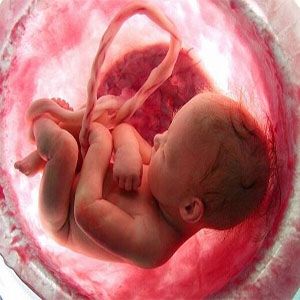
In some cases, pregnant women may have an abortion without any reason, in which can be said that women do not have any special role in the occurrence of this problem and it may occur due to other reasons. On the other hand, if a woman decides to terminate her pregnancy, it is still called an abortion.
There are three types of abortion:
-A woman takes medicine to end her pregnancy.
-A woman has surgery to end her pregnancy. This type of abortion is usually performed in the first trimester (first 3 months) of pregnancy. A physician or other health care professional performs the procedure. It is done in a hospital, physician’s office or health center.
-A woman loses her fetus for some reason.
Reasons that cause growth disorders and unwanted abortions; as follows:
Abortion brings signs and symptoms for a person, which include the following:
In order to diagnose recurrent miscarriage, various methods are used, the most important of which are the following:
Abortion treatment depends on the type of miscarriage you have experienced. If you had an unwanted abortion and there was no tissue of the fetus in your uterus, that is, the abortion was done completely, no special treatment is needed, only post-abortion care is more important.
If you still feel a certain tissue in your uterus after a miscarriage, it can be treated in different ways:
-Waiting: This is where you wait for the remaining tissue to leave your body naturally
-Pharmaceutical or medical: That involves the use of drugs to help easily remove the remaining tissue.
-Surgery: This involves surgically removing any remaining tissue in the uterus.
The risk of complications from any of these treatment options is very small, so you can work with your physician to determine which one is right for you.
How your body recovers, depends on how pregnant you were before the miscarriage. After a miscarriage, you may experience symptoms such as spotting and abdominal discomfort.
While pregnancy hormones may remain in the blood for several months after a miscarriage, you should resume normal periods in four to six weeks.
It’s normal to experience a wide range of emotions after a miscarriage. You may also have symptoms such as sleeping trouble, low energy, and frequent crying.
Abortion before 63 days of pregnancy is safe. Vacuum aspiration in the first trimester is the safest surgical procedure and can be performed in a primary care office, abortion clinic, or hospital.
In answer to this question, we must say that there are various methods to prevent abortion, for example, obesity is one of the things that increases the possibility of abortion in women. So, considering the importance of this issue, it is better to prevent your weight from increasing and always have an ideal weight.
In answer to this question, it should be said that with the onset of pregnancy, menstruation stops naturally, so you must not see any spotting or bleeding during pregnancy. One of the most important points during pregnancy is that if the spotting is in the first trimester of pregnancy, it is called an unwanted abortion, and for further investigations, it is necessary to do an ultrasound.
Having a central abortion can bring a lot of complications and physical risks for the couple, therefore, the most important complications can be mentioned as follows:
– Depression
– Infection
– Anemia
– Creating intrauterine adhesions
– The need for surgery to remove the remaining fetus
Unintended abortion is an unpleasant experience after which the mother must rebuild herself and think about a safe pregnancy again. You may experience a wide range of emotions after a miscarriage. If you need to talk about your feelings, call an infertility treatment center and ask about post-abortion counseling.
Many women avoid expressing their sexual problems because it leads to their embarrassment, but you should not be afraid about this issue because many of these problems can be treated, so avoid hiding your problems from your spouse and physician. You should note that misconceptions have a negative role in the occurrence of sexual disorders in women, and opposite to that, there is a positive and important role of the husband who should support his wife in all stages. In this article, we intend to discuss some sexual disorders in women. Let’s mention the causes and treatment methods, so stay with us until the end of this article.

The cycle of sexual response in humans includes 4 stages of arousal, plateau (before orgasm), orgasm and subsidence. One of the most important causes of sexual dissatisfaction in Iranian society is sexual disorders in women. These disorders may cause sexual dissatisfaction at any stage of the sexual cycle.
Different types of female sexual dysfunction are:
sexual hatred
Sexual arousal disorder
Fear of male penis
Vaginismus disorder
Painful intercourse (dyspareunia)
Not reaching orgasm
Headache after intercourse
Boredom after intercourse
This disorder is much more severe than lack of sexual desire. The treatment of this disorder is much more difficult than other sexual disorders of women and it is known as the most acute disorder. In this disorder, the person not only does not want to have sex, but also hates it.
The person is not aroused for any reason, but has sexual desire.
This disorder causes the muscles of her thighs, abdomen, arms and legs to contract. The cause of this disorder is false beliefs and transfer of these beliefs among girls, which can be easily treated by giving objective information to the patient.
In this case, all the muscles of the abdomen, arms and legs are relaxed, but the muscle at the beginning of the vagina is contracted. This will prevent the penetration of the male penis.
Some of the women’s fears and discomforts since childhood or the conflicts she had with her husband cause women to not be properly aroused. Therefore, intercourse is very painful for a woman. Other factors affecting this disorder include vaginal dryness, postpartum period, menstrual period, genital diseases, people not being physically ready, intercourse and ovulation at the same time, sexually transmitted diseases and some cancers that cause the nerves in that area have been destroyed.
It is one of the most common sexual disorders in women because of prejudiced beliefs that destroy the right of women to reach the peak of sexual pleasure, which is more common in the Middle East than in the West. Also, raising girls by encouraging the preservation of modesty makes that girl unable to immediately abandon modesty when she has sex with her husband. Even in some people, there is a belief that she will be judged by her husband. She is also afraid that she will be accused of being a loose woman.
This disorder is associated with symptoms such as muscle contraction in the head area, nausea and headache.
In this case, the woman gets depressed after intercourse.
Also, sexual problems and disorders can be divided into primary and secondary disorders based on the time of the disorder.
Primary disorder: includes disorders that have existed since the beginning of sexual intercourse and are related to issues before marriage.
Secondary disorder: It includes disorders that were not present in the initial intercourse and appeared in the woman after some time. In this case, one should look for effective factors after marriage.
You should note that taking advice from people and experts at a distance always increases the possibility of misunderstanding. Therefore, it is better to visit a physician in person to check your sexual problems and disorders more closely and get their help. After visiting the specialist, the physician conducts physical tests and complete evaluation of the symptoms and examinations on the pelvis and reproductive organs. It should be noted that at this stage, the most important factor affecting the physician’s diagnosis is expressing your own attitude towards sexual relations.
Disorders of lack of sexual desire, failure to reach orgasm, painful intercourse and lack of arousal are among the consequences of menopause in women. In the past, hormone replacement was used to solve this issue, but after a while, due to the increase in cancer in women, there was a difference of opinion among experts.
Some physical and medical factors cause problems and sexual disorders in people. Diseases such as diabetes, neurological diseases, heart disease, imbalance in hormones, menopause, kidney diseases, excessive consumption of alcohol or drugs, as well as liver failure can be the physical causes of sexual disorders in women.
One of these psychological factors can include marital and sexual problems between a woman and her husband.
Anxiety and work stress can be very effective on human sexual relations.
The presence of sexual performance concerns between the individual and the couple can be another effective psychological factor.
Also, the effects of a psychological and sexual injury that exists in the past of people, causes many sexual disorders in women.
Guilt is another factor affecting women’s sexual disorders
The best and most suitable method for the treatment of sexual disorders is to form a team of patients, physicians and psychologists. Providing education, increasing stimulation, reducing the amount of pain by using vaginal lubricants or being under control of the sexual process by the woman, Providing distraction techniques and methods, taking help from a family counselor and psychologist are other treatment methods.
Education: Education and learning about the anatomy of the human body and making any changes due to aging can help women reduce their anxiety about sexual performance.
Increased stimulation: This includes self-gratification and sexual stimulation tools such as movies or books.
Distraction techniques: having erotic or non-erotic fantasies with the help of music, movies, leads to a decrease in one’s anxiety and, most importantly, an increase in one’s relaxation.
Reducing pain: using some methods such as vaginal lubricants, taking a warm shower before reducing the pain caused by the contact of the penis with the vaginal wall.
Non-penetration sexual activity: performing some sexual activities such as body massage that leads to increased comfort can be very appropriate.
Many women, when they face sexual problems, it is better to go to the physician immediately to prevent it from continuing and the negative effects it causes, so that he can treat this issue with more detailed examinations.
There are many women who face a decrease in sex drive and vaginal dryness after performing hysterectomy surgery. In addition, during surgery, blood vessels and nerves may have problems and disorders.
Both men and women are subject to sexual disorders, and this problem may occur at any age, but it is usually more common in older people.
In this article, we intended to introduce you to women’s sexual disorders, so please note that this topic plays a very important role in improving the quality of your marital relationship, which if appropriate treatment measures are not taken at the right time, it can lead to life falling apart, so it is necessary to see a physician immediately for treatment.
Testicular tissue freezing is considered as one of the ways to prevent male infertility. This method is often used for people who have cancer. Boys and men with cancer may experience infertility due to being treated with radiation therapy and chemotherapy. This issue is due to the damage that these treatment methods cause to the testicle tissue. For this reason, these men must undergo testicular tissue freezing during or after radiation therapy. Freezing the testicle tissue should be done at a very low temperature. This temperature is estimated to be around -180 degrees Celsius. This low temperature is created by liquid nitrogen, and by using this method, the testicle can be preserved for a longer period of time. In fact, the use of this method has helped to keep the testicle tissue healthy and, most importantly, fertility will be maintained.
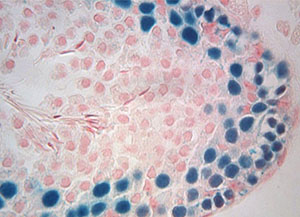
Testicular tissue freezing is usually performed as a small surgery. During this operation, the patient is usually under anesthesia. Then the surgeon splits the scrotum and takes the sample. Sampling is usually done from one testicle. In fact, the surgeon performs a testicle sampling operation with the help of testing methods or micro testing.
During this operation, some part of the testicular tissue is removed. Then this tissue will enter the preservative material and freeze operation will be done on it in the shortest possible time.
In the testicular tissue freezing method, first, the sample removed from the testicular tissue is divided into smaller pieces. After this stage, the surgeon examines the presence of sperm in these parts. If there were healthy sperm in this sample, the physician can easily freeze the testicle tissue using liquid nitrogen.
Using testicular tissue freezing method can have many advantages. In general, it can be said that the main purpose of performing this method is to preserve fertility in men and boys with cancer. In fact, this issue is considered the main advantage of using this method.
Among the other advantages of using the testicular tissue freezing method, we can mention the preservation of fertility in men who have to remove the testicles. Unfortunately, many men have to have their testicles surgically removed due to sexual diseases. These men will not be fertile. Therefore, it is possible to preserve male fertility by freezing the testicle tissue before removing the testicle.
Also, those men suffering from azoospermia can use testicular tissue freezing. Azoospermia is one of the most common causes of infertility in men. In this disease, the man’s semen lacks sperm. In fact, it can be said that doing this is known as one of the methods of treating this type of infertility, which should be combined with microinjection.
In general, it can be said that the use of testicular tissue freezing does not pose any risk for men. This method has been tested many times on animals, and for this reason, humans can also use testicular tissue freezing to treat their infertility without worry.
Of course, it should be said that the final result of this method is not certain. It means that it is not possible to give a definite scientific and medical theory about the effect of using this method on the birth of babies.
Now you may have questions about the cost of testicular tissue freezing. It should be said that the cost of performing this surgery depends on various factors. The expertise of the surgeon is one of these factors. The more skill and expertise the physician has, the higher her/his salary will be. Therefore, the final cost of the surgery will also increase.
The place of treatment is also considered as another factor affecting the cost of testicular tissue freezing. If you are treated in private clinics, you have to pay more than in hospitals.
On the other hand, the devices and equipment used in surgery also affect the final cost of the operation. Obviously, the more advanced and modern the devices, the higher the cost of surgery. Therefore, a fixed and definite cost cannot be considered for this method. Rather, the cost of freezing the testicle tissue can increase or decrease according to the factors mentioned.
In general, it can be said that testicular tissue freezing is used for men who have infertility problems. This infertility may occur due to the use of chemotherapy, radiation therapy, etc. during cancer treatment. Azoospermia is also one of the most important causes of infertility in men. However, if a man feels the risk of infertility, he can help preserve his testicles by freezing the testicle tissue. This operation is a small surgery that takes place at a very low temperature. Since performing this surgery is very sensitive, it is better to do it in the best infertility center in Tehran so that it will bring good results.